Cased wells
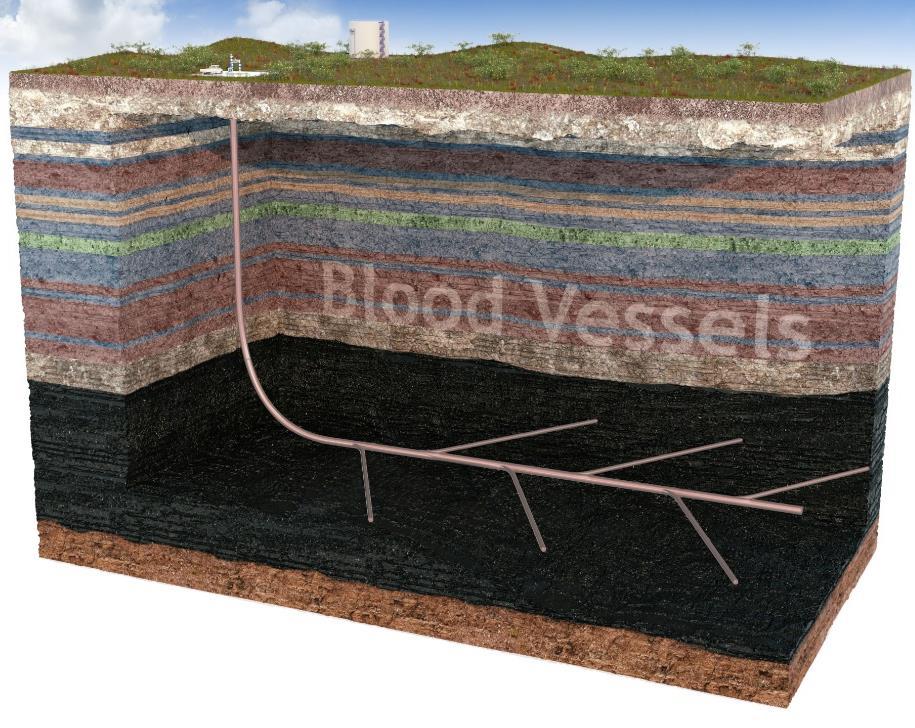
Exiting vertical and deviated cased wellbores. Windows are prepared in the casing to drill lateral channels.
Technology for creating small-diameter radial horizontal channels
Blood Vessels™ technology is designed to increase the reach and drainage area of wells in cased and open holes. It does so by creating a network of small-diameter radial horizontal channels in the producing formation, which increases hydrocarbon inflow and improves the oil recovery factor.
It combines a new rock-cutting method using high-pressure fluid jets with engineering solutions for channel trajectory management and process parameter monitoring.
The technology has potential for further industrial trials and development with manufacturing, technology and investment partners.
Oil and gas fields
Additional channels are created from the main wellbore to reach a larger area of the formation.
Operations are performed using a coiled tubing unit. The assembly uses a two-part flexible tubing system with supply and working sections. High-pressure fluid jets cut the rock.
The technology covers preparation of an exit through the casing, channel drilling and parameter monitoring. Bottomhole pressure is controlled by adding nitrogen to the fluid or restricting fluid outflow at the wellhead.
Exiting vertical and deviated cased wellbores. Windows are prepared in the casing to drill lateral channels.
Creating a network of channels from an open horizontal section of the well.
The implementation stage depends on the application area.
| № | Application area | Readiness |
|---|---|---|
| 1 | Cased holes of vertical and deviated wells, BV_01 version | Implementation in OPR mode |
| 2 | Open horizontal holes, BV_02 version | Implementation in OPR mode |
| 3 | Cased horizontal holes, casing diameter from 114 mm | Investment in OKR, OPR |
| 4 | Lightly cemented sandstones, BV technology with propant-packed laterals | Investment in OKR, OPR |
| 5 | BV + hydraulic fracturing hybrid, directional fracturing | Implementation in OPR mode |
| 6 | New vertical, deviated and horizontal wells before liner running | Implementation in OPR mode |
| 7 | New vertical, deviated and horizontal wells after running casing with BV controlled ports | Investment in OKR, OPR |
| 8 | BV + EOR hybrid, sweep control | Implementation in OPR mode |
| 9 | Shale plays | Investment in OKR, OPR |
| 10 | Offshore fields | Investment in OKR, OPR |
| 11 | BV technology with the option of casing the laterals with liners | Investment in OKR, OPR |
OPR — pilot-commercial trials; OKR — experimental design work.
A coiled tubing unit and a two-part flexible tubing system with supply and working sections.
For cased wells, four windows are milled sequentially in the casing.
High-pressure fluid jets cut the rock and form a lateral channel.
Angles, temperature and pressure are measured to monitor channel drilling.
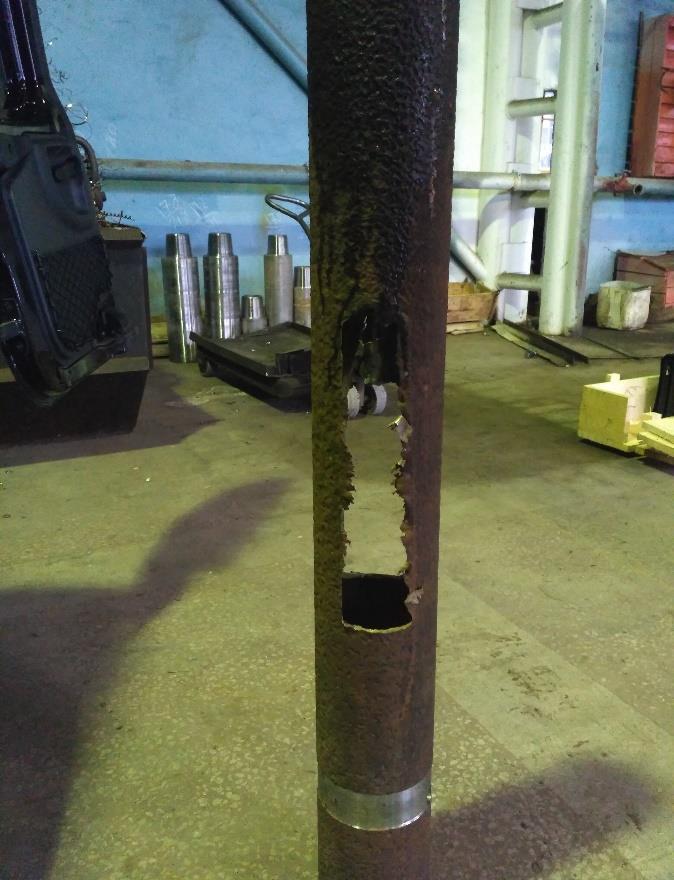
Test-site, field and bench trials.
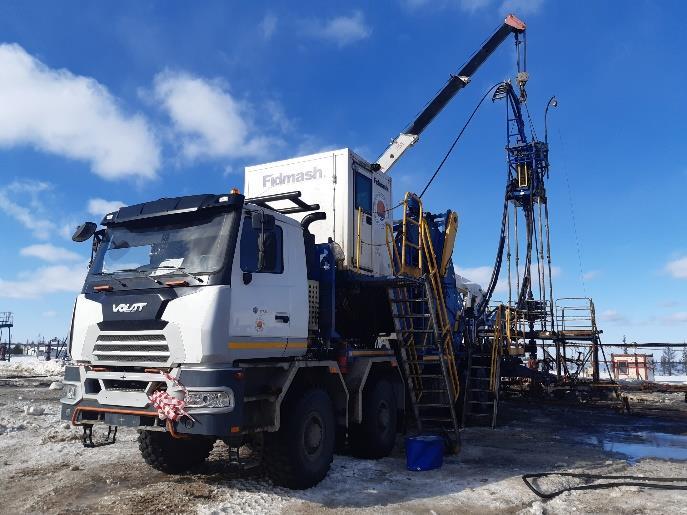
Results from test-site trials in Tatarstan. The stated maximum channel length is up to 100 m.
Four windows were milled in 146 mm casing at a depth of 890 m. Three laterals up to 35 m long were drilled, and an autonomous inclinometer was tested.
Four windows were cut in 168 mm casing at a depth of 2,165 m in well No. 10. Operations were suspended in April 2020 due to the pandemic.
Starter channels were drilled in a strong carbonate sample with a build-up rate of 8° per metre. Further deployment involves the use of specialised sidetracking nozzles.
Operating principle, equipment, application options and test results.
Tell us about the well conditions and the objectives of the work. We will put you in touch with the developer to discuss how Blood Vessels could be applied.